Arabian wedding traditions are a varied collection of family and community customs, rather than one ceremony followed across the Arab world. A wedding in Oman may look different from one in Lebanon, Egypt or a diaspora community. Religion, locality, family history and the couple’s preferences all influence the celebration. Start by asking which traditions matter to the people getting married.
This guide uses “Arabian” as a familiar search term while discussing Arab wedding cultures more broadly. The Arabian Peninsula is one part of the Arab world; North Africa and the Levant have their own distinct histories. Middle Eastern, Arab and Muslim are not interchangeable descriptions. Arab families include people of different faiths, and many Muslim communities are not Arab.
Begin with the family story
Before choosing a procession, dress or menu, invite both families to describe weddings they remember. Ask what made those occasions meaningful: a song, a welcome, a particular meal, a gathering at home. These conversations often reveal more than a generalized mood board. They also show where relatives have different expectations about timing, hosting and participation.
Family involvement can be generous and practical, but it should not replace the couple’s decisions. Agree who has authority over the guest list, spending and ceremony. A small planning group can gather suggestions without turning every choice into a public negotiation. Our step-by-step planning guide turns these conversations into a workable brief.
Engagement and marriage are different moments
An engagement celebration, a marriage ceremony and a reception may happen on different dates. Families sometimes gather for introductions or exchange gifts before a larger wedding. The order and significance of those events vary. Do not assume that attending one gathering means being invited to every subsequent occasion, or that an engagement party itself creates a marriage.
Religious and civil requirements depend on the couple and jurisdiction. A Muslim marriage contract, a Christian church service and a civil ceremony should never be described as identical customs. Confirm the actual requirements with the relevant officiant and public authority. For a cross-border marriage, begin that work early; an editorial guide cannot establish legal eligibility.
Henna as a gathering, not a universal requirement
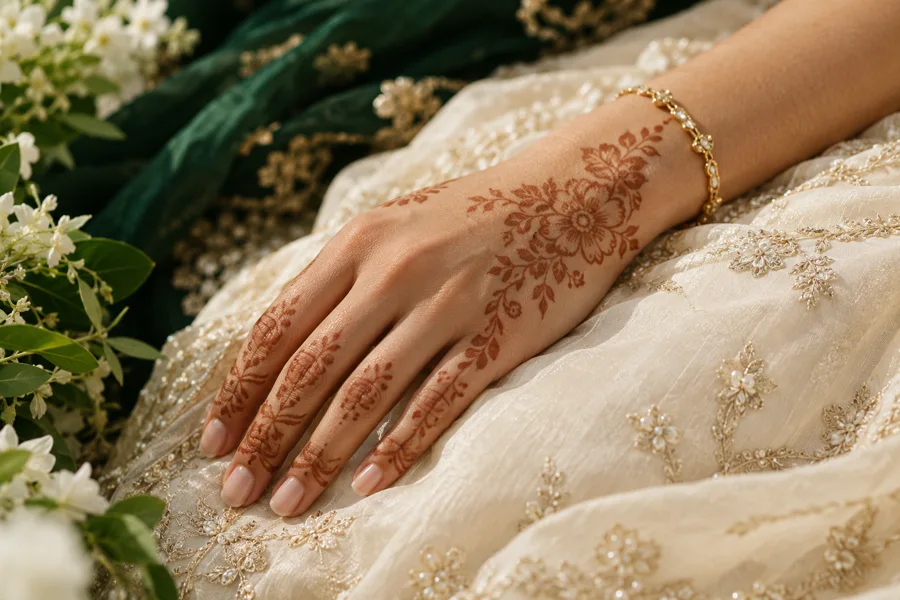
A henna celebration can offer time for music, conversation and adornment before the wedding. Its scale may range from a few relatives at home to a separately hosted event. Some families include it, some adapt it, and others do not practice it. Guests should follow the invitation rather than assume that henna night always has the same guest list or format.
UNESCO’s henna heritage entry documents shared practices across multiple countries while recognizing local variation. Treat that record as cultural context, not a script for your celebration. Our henna night guide focuses on hosting choices, guest comfort and respectful participation.
Clothing carries specific histories
There is no single Arabian wedding dress. A bride may choose a contemporary white gown, a regional garment, an heirloom piece or several outfits. Relatives may attach particular meaning to embroidery, jewelry or the way a garment is worn. Ask about that context before borrowing a look for an inspiration shoot or describing it as traditional.
A useful specific example is Tlemcen’s wedding costume tradition in Algeria, documented by UNESCO. It demonstrates the importance of named places and craft practices. It does not establish a dress code for other Arab weddings. For practical decisions about lining, movement and accessories, explore our bridal dress guide.
Hospitality is experienced in small details
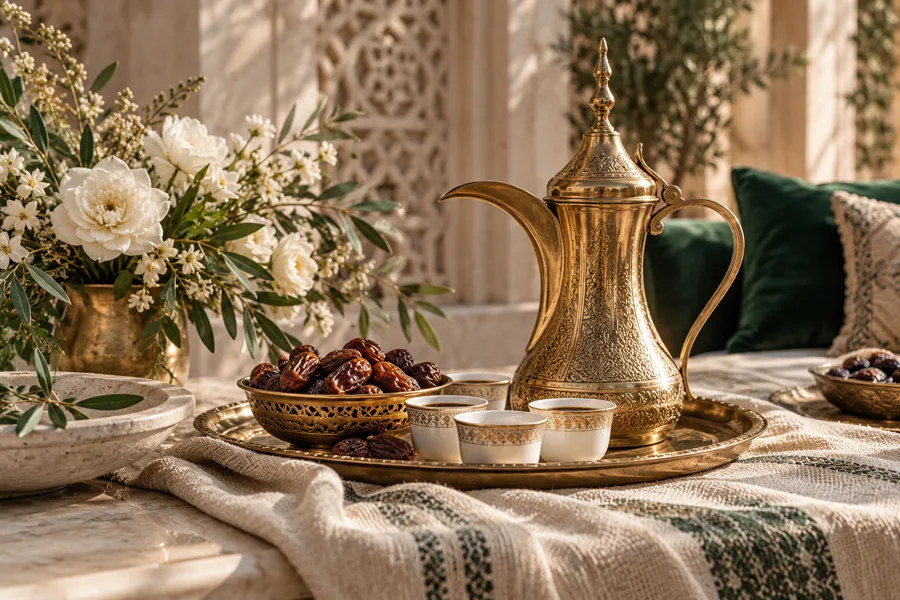
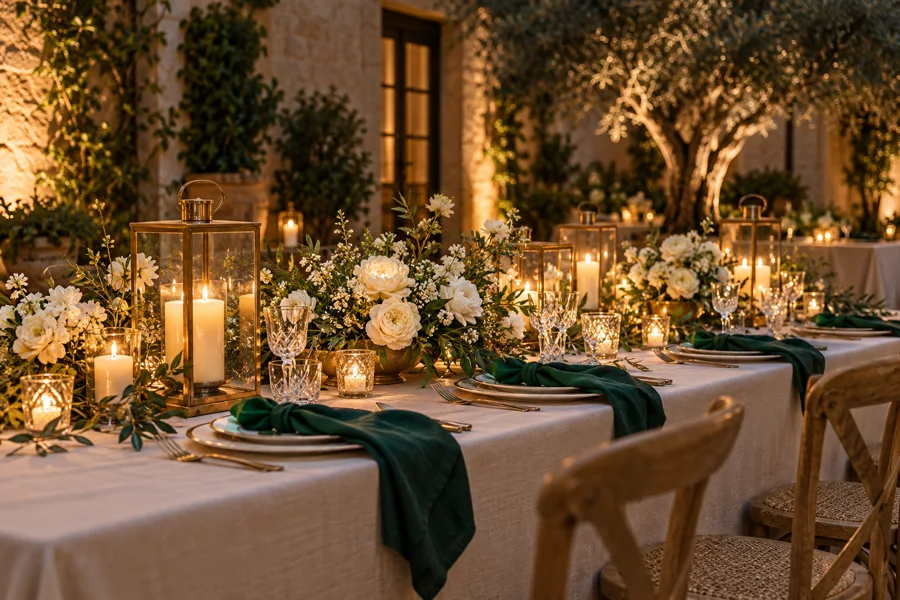
Food and welcome can form the emotional center of a wedding. Consider how guests arrive, where older relatives sit and whether people can find water without asking. A generous celebration need not depend on an extravagant menu. Clear dietary information and enough time to eat often make a greater difference than a large number of courses.
UNESCO describes Arabic coffee as a practice of generosity, including wedding hospitality in the communities covered by the entry. That is a grounded example, not a claim that every family serves identical coffee. Let relatives explain their own serving preferences and give the caterer explicit instructions.
Music, entrances and the reception
Ask the couple what kind of entrance they want before booking performers. A procession can be an important family moment, but its music, participants and meaning should come from the relevant community. Avoid assembling unrelated regional elements simply because they appear dramatic together. A short explanation in a program can help unfamiliar guests understand what they are seeing.
Some celebrations include dancing; others have different entertainment preferences. Check sound limits, access needs and photography boundaries. Where events or spaces are separated by gender, communicate the arrangement clearly and privately. Our guest etiquette guide explains how to ask useful questions without treating unfamiliar customs as a spectacle.
A practical conversation checklist
- Which place, family or community does each chosen custom come from?
- Who can explain its meaning and guide participation?
- Is it essential, optional or unsuitable for this couple?
- What should guests know before arriving?
- Does the schedule leave time for meals, rest and meaningful greetings?
- Have both partners agreed to the final format?
Write the answers in ordinary language and share a concise version with vendors. The goal is a celebration that people can inhabit comfortably. A clear plan protects the moments that matter while allowing a wedding to reflect contemporary lives.
Questions couples often ask
How long does an Arabian wedding last?
There is no universal duration. Ask which gatherings are included and request a schedule for each one. A single reception and several separate family events need very different travel and hosting plans.
Can a multicultural couple adapt traditions?
Yes. Discuss adaptations with the people whose practices you are including, explain them honestly and preserve both partners’ agency. Choose meaningful participation rather than attempting to reproduce every custom associated with either background.
Prepared for this edition on October 21, 2026. Cultural references are linked in context. Requested commercial and message-resource links are marked nofollow; products have not been tested.