Arabian bridal dresses encompass contemporary gowns, regional garments and personal combinations of both. The right choice depends on your family context, ceremony, climate and comfort. Begin with the shape and coverage you want, then consider fabric, craft and accessories. No single neckline, color or embroidery style represents every Arab bride.
A beautiful garment should let you sit, embrace relatives and enjoy the meal. Before falling in love with a photograph, think about the actual day: the journey to the venue, time outdoors, the number of outfit changes and whether you will have help. Those practical details are part of style, not obstacles to it.
Look for a specific source of inspiration
When a reference image is described only as Middle Eastern, ask for more information. Which designer created it? Does it depict a named regional garment or a modern runway interpretation? Knowing the source helps you discuss the design accurately and supports a more thoughtful conversation with an atelier or stylist.
For a documented example, UNESCO’s entry on Tlemcen’s wedding costume tradition connects dress to a particular Algerian community and its craft. It is one example among many. Avoid copying a complete ceremonial outfit without understanding how it is worn and what its elements mean.
Choose a silhouette by movement
An A-line skirt can offer space for walking and sitting, while a fitted silhouette may suit a bride who prefers a closely shaped look. A full skirt creates volume but needs room in cars and changing areas. A straight dress can feel restrained and architectural, though the ease around the hips matters when sitting.
Try each shape with shoes at the intended heel height. Walk on a surface similar to the venue floor and practice turning. If you plan to dance, test that movement too. A dress that looks dramatic while standing still should not dictate how you spend the reception.
Modest bridal style starts with your definition
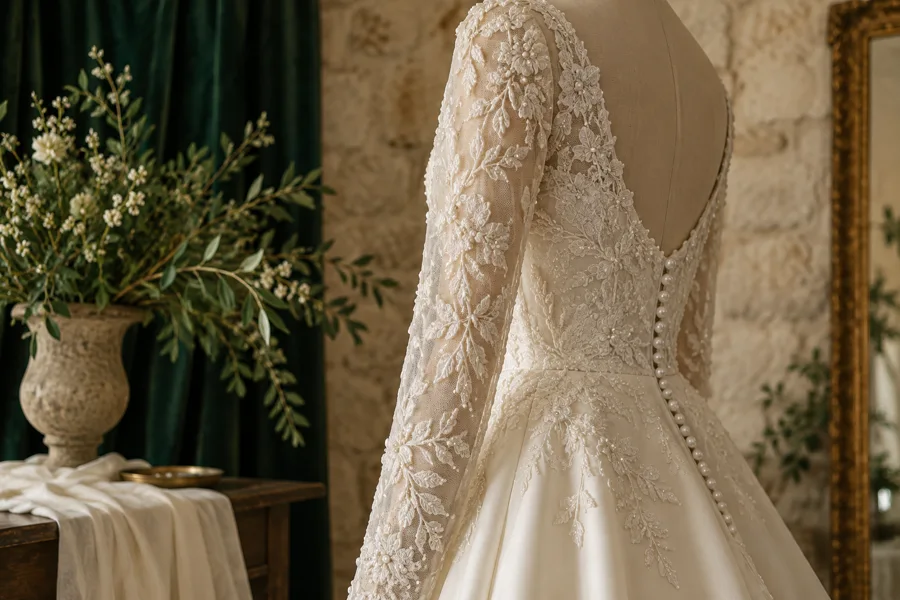
Coverage is personal. Some brides want an opaque high neckline and full sleeves; others prefer a different balance. Explain your needs explicitly rather than assuming the word modest means the same thing to every consultant. Specify the back, neckline, sleeve length, lining and how the dress behaves under bright light.
If you wear a head covering, consider its fabric and anchoring alongside the gown. Test the full arrangement before the wedding. A heavy veil, earrings and decorative headpiece may compete physically even if they look harmonious in a photograph. Bring any private dressing requirements into the appointment conversation early.
Compare fabrics in the conditions that matter
| Fabric direction | Visual effect | Ask at the fitting |
|---|---|---|
| Structured satin or mikado | Defined lines and a smooth surface | Can I sit easily, and how does the fabric crease? |
| Chiffon layers | Softness and movement | Is the lining opaque in daylight? |
| Lace or embroidery | Detailed texture | Do seams or beads rub against my arms? |
| Tulle volume | Light-looking fullness | How much room does the skirt need? |
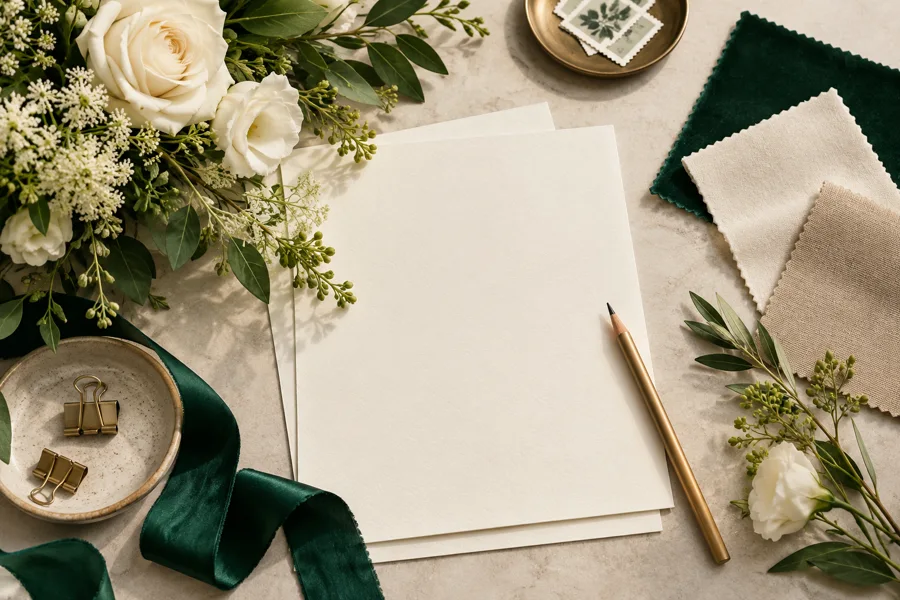
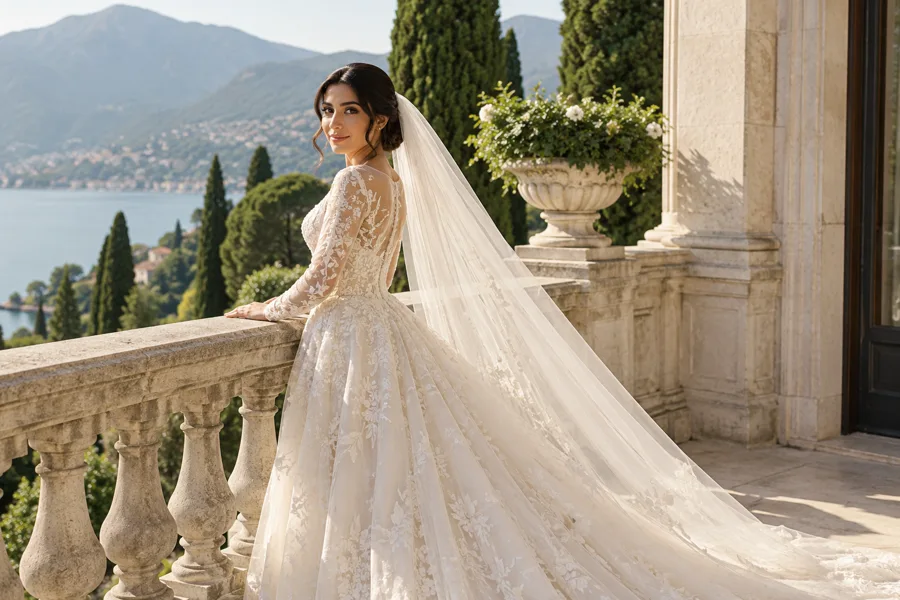
Fabric names alone cannot establish comfort. Lining, construction, weight and fit change how a garment feels. Ask for swatches, examine them under daylight and compare them with the venue palette. Ivory shades vary; choose accessories with the actual dress nearby rather than relying on a phone screen.
Let embroidery remain the focal point
If embroidery has a family or regional connection, ask the maker to explain it. Record the garment’s provenance for your own keepsake notes. If it is simply a modern floral or geometric design, describe it that way. Decorative similarity does not justify claiming that a motif has an ancient or sacred meaning.
Balance dense detail with quiet areas. Embroidered sleeves can work with a plain skirt and simple veil. A heavily decorated bodice may need fewer necklaces. Choose the element you want people to notice first, then edit the rest. Our decor guide applies the same principle to the room.
Accessories, heirlooms and outfit changes
Bring meaningful jewelry to a fitting before committing to the neckline. Check clasps and decide who will keep valuable pieces safe during changes. If you are borrowing an heirloom, agree how it will travel and where it will be returned. Avoid handing important items between several helpers without a named custodian.
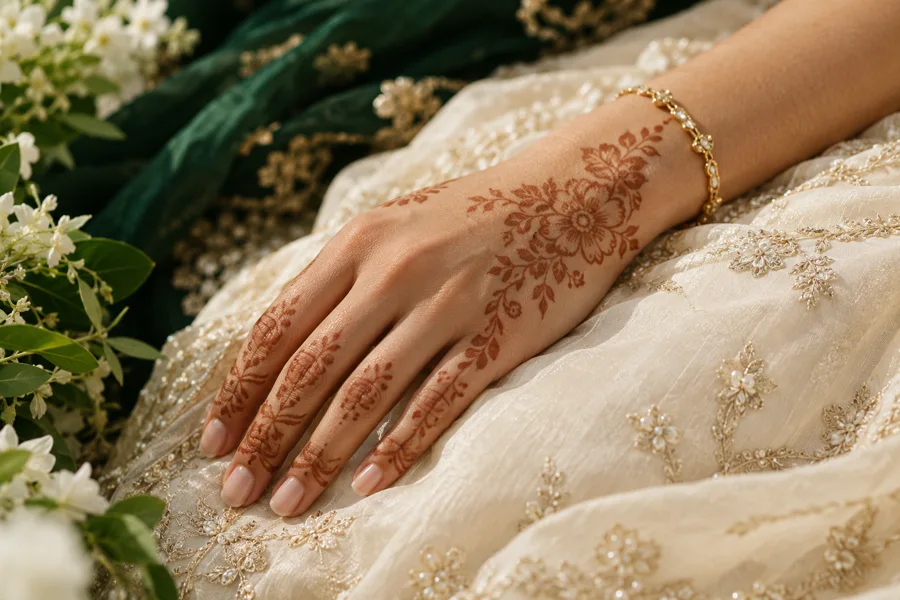
A second outfit should solve a real need, such as easier movement or a different event format. Include alteration costs and changing time in the decision. A beautiful henna night outfit need not duplicate the wedding gown. Rewearing an existing garment can be a deliberate and personal choice.
Your final fitting checklist
- Wear the planned undergarments, shoes and headwear.
- Sit for several minutes and test walking, stairs and arm movement.
- Check opacity from front and back in different lighting.
- Practice the bustle or train arrangement with the person helping you.
- Confirm steaming, transport, storage and collection instructions.
- Carry a small repair kit suited to the fabric.
Photograph practical details such as fastening order and train attachments. Ask the atelier what should never be ironed directly or treated with water. Add dressing time to your wedding timeline so preparation feels calm. If relatives have clothing expectations, discuss them before the final appointment rather than on the wedding morning.
Bridal style questions
Must an Arabian bridal dress be white?
No universal color rule applies across all Arab communities or events. Ask your family and officiant about the specific occasion, then choose a garment that reflects the setting and your preferences.
Can guests wear a similar silhouette?
Guests should follow the couple’s dress guidance and avoid deliberately competing with the bridal outfit. Our wedding etiquette guide explains how to ask about color and formality without making assumptions.
Prepared for this edition on October 21, 2026. Cultural references are linked in context. Requested commercial and message-resource links are marked nofollow; products have not been tested.